
How would you describe it?
A bird without feathers?
A mother that nurses her young—yet flies?
A creature often confused with its blood-feeding cousin, yet far more helpful than harmful?
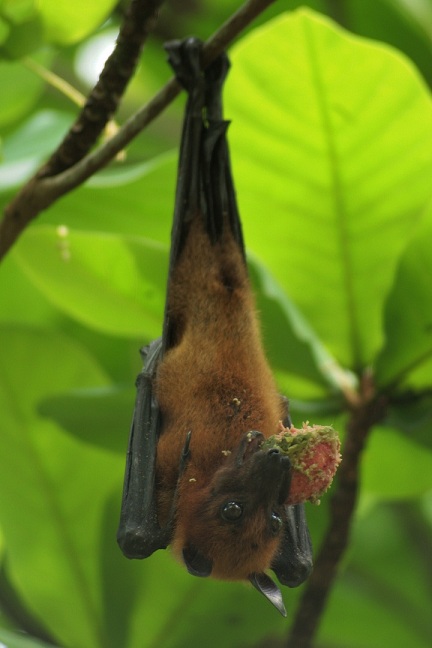
Welcome to the misunderstood world of the Indian flying fox (Pteropus giganteus), a species of megabat in the Pteropodidae family.
By night, these flying mammals take to the skies with wingspans stretching over four feet, silently gliding over long distances in search of large, ripe fruits. With every fruit consumed, they offer a valuable service—seed dispersal, helping to regenerate forests across South India. Though these acts occur under the cover of darkness, their impact on the ecosystem is immense and often overlooked.
By day, they hang upside down in communal roosts, known as camps, often located in sacred groves—forest patches protected for centuries by spiritual belief, typically near a large water body. These groves have now become vital sanctuaries for flying fox colonies.
Their inverted sleeping posture, nocturnal lifestyle, and fox-like faces with reddish-brown fur have made them characters of folklore—often feared, sometimes vilified, rarely understood.
But fear fades with knowledge. The Indian flying fox is not a vampire, nor a threat. It is a keystone species, crucial to maintaining the health and balance of tropical ecosystems.
Named for their resemblance to foxes due to their reddish fur and pointed snouts, these bats are mammals in every sense: warm-blooded, fur-covered, and yes—mothers that produce milk to nurse their young.
At Soul India Nature Tours, we celebrate these hidden wonders and bring them into the light. Observing flying foxes in their natural camps is a unique wildlife experience—one that blends ecology, mythology, and conservation.
We’re delighted to share this overlooked marvel with you as part of our mission to reveal the unnoticed fascinations of India and the quiet joy hidden within them.
Feel free to share this wonder with others, and if it’s not for you, simply let it pass—we respect your journey.